Strategic Partnership between ECOSUN and CATL
30.12.2025
From size and manufacturing date to pressure, snow symbols and the EU label: what the main markings mean and where to find them.
Look at a tyre sidewall and you see letters, numbers and symbols. Which ones help you request the correct replacement? Which describe a capability and which a limit? This guide takes you through them in order, without requiring technical knowledge. It covers common and important markings on passenger-car and light-commercial tyres, together with special markings you may encounter. It does not assign a universal meaning to every proprietary code used by every manufacturer.
The sidewall is the black side between the wheel rim and the tread that touches the road. Its moulded codes describe that particular tyre. The EU label is separate information supplied when buying tyres and compares specific aspects of performance.
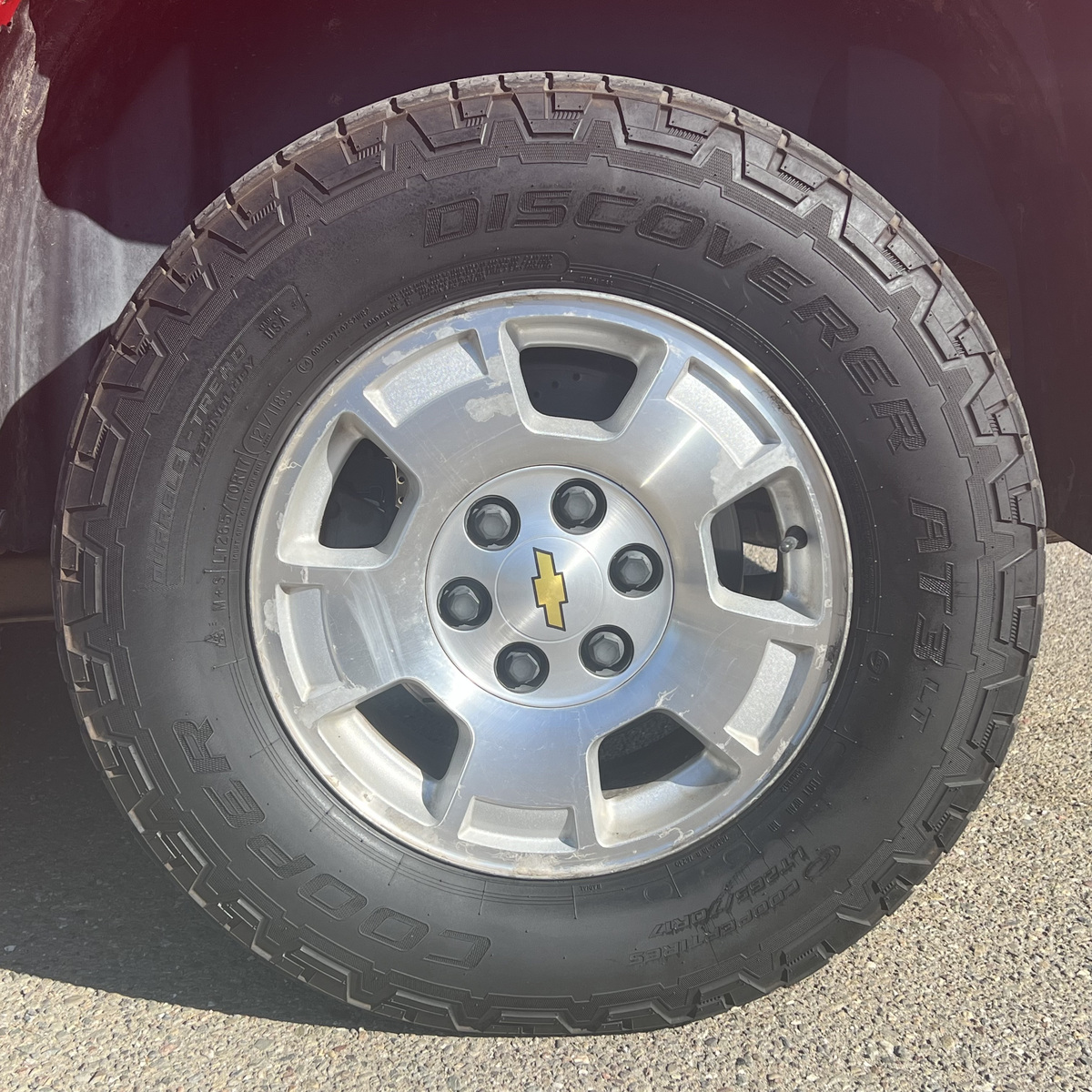
Start with the brand and model, then find the size and load/speed ratings. The same product name can be sold in different versions: the name alone is not enough to select a correct replacement.
Sources: European Commission · Continental.
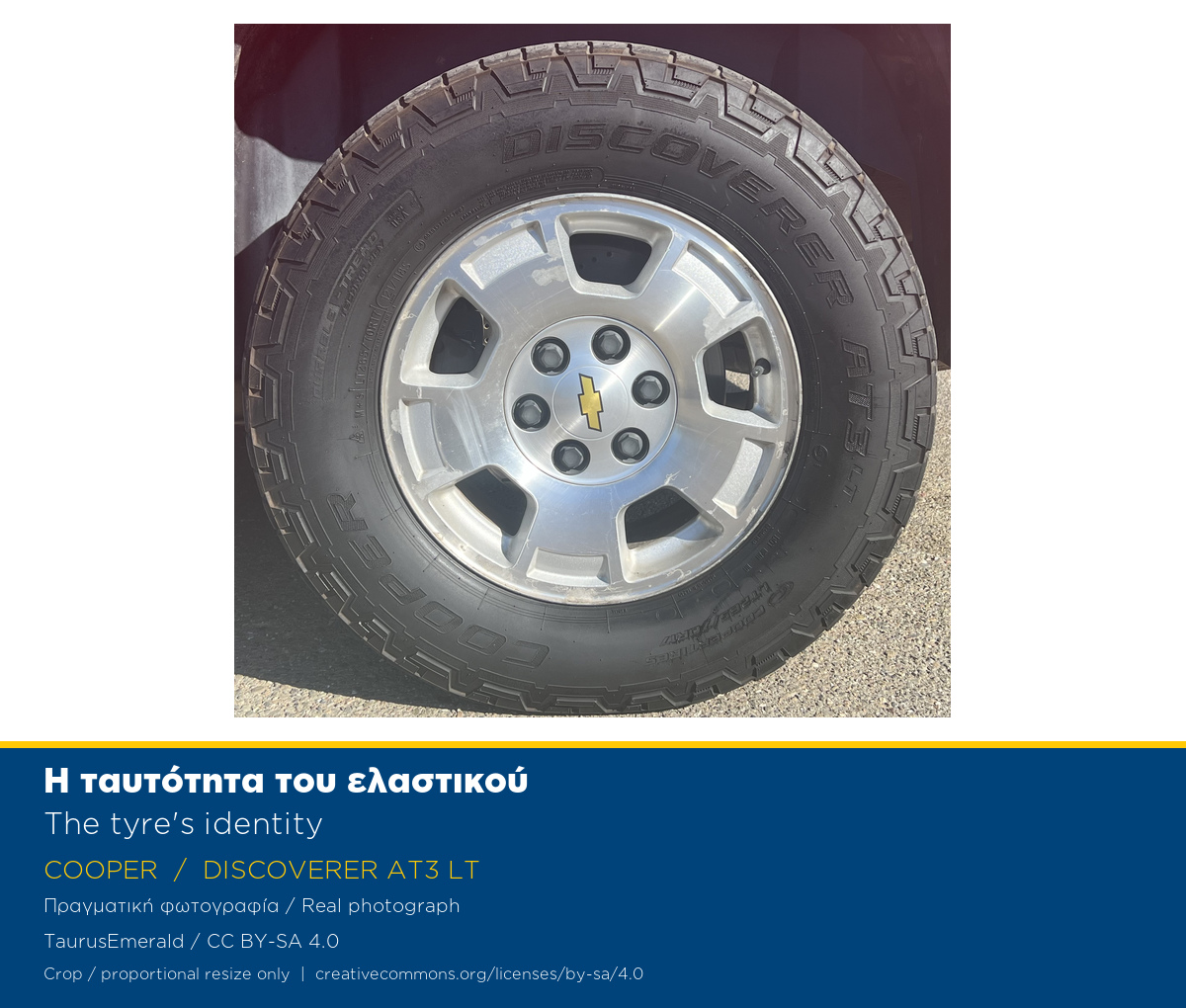
TaurusEmerald – CC BY-SA 4.0
TaurusEmerald — Πηγή / Source · CC BY-SA 4.0
Περικοπή / αναλογική αλλαγή μεγέθους και χωριστές λεζάντες. Crop / proportional resize and separate captions. Photo adaptations retain the source licence.
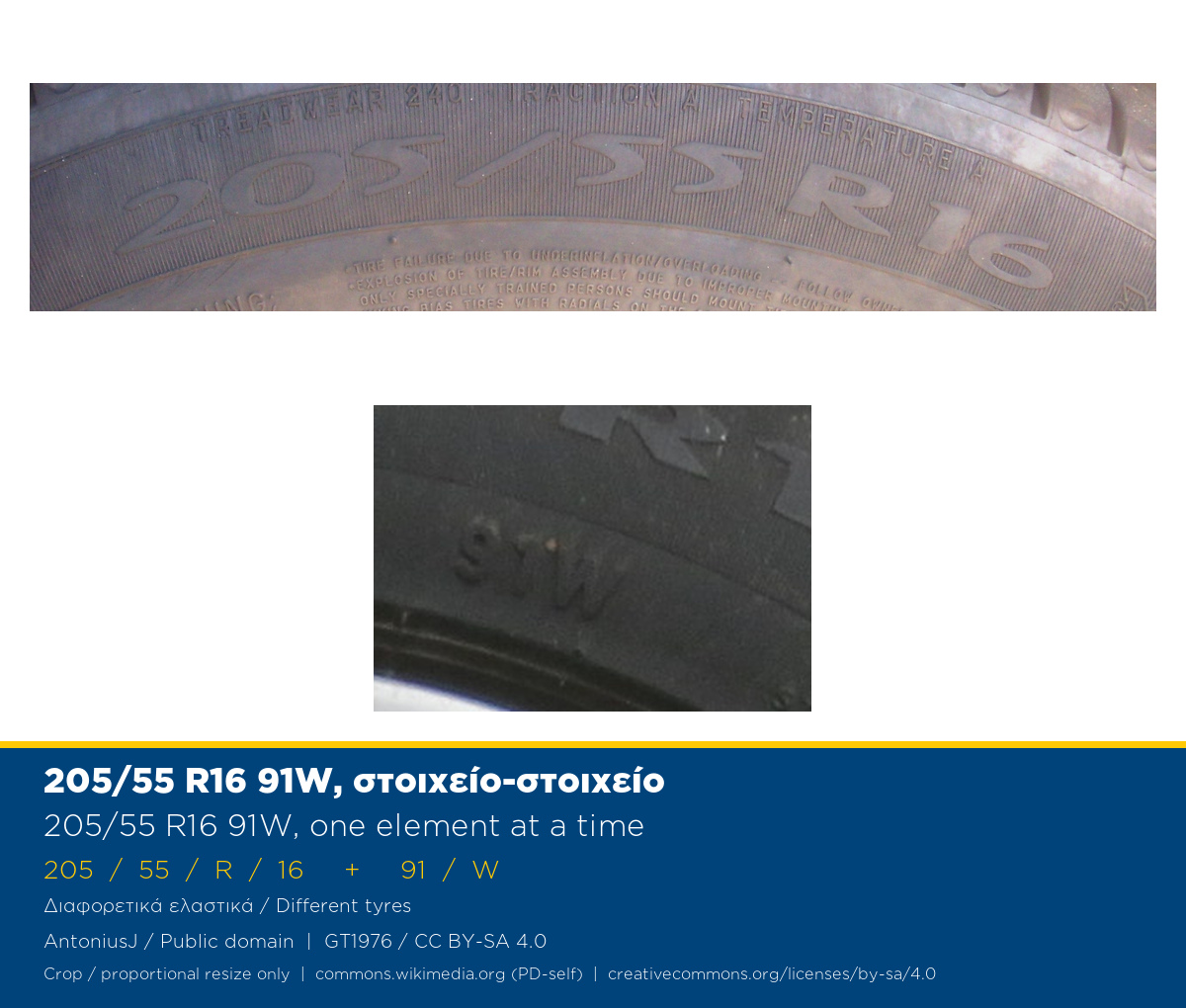
We use 205/55 R16 91W as a teaching example. It is not a recommended fitment for a particular ECOCAR. If your tyre has different numbers, the reading method is the same.
Sources: European Commission · Goodyear · USTMA.
AntoniusJ – Public domain (PD-self) / GT1976 – CC BY-SA 4.0
AntoniusJ — Πηγή / Source · Public domain (PD-self)
GT1976 — Πηγή / Source · CC BY-SA 4.0
Περικοπή / αναλογική αλλαγή μεγέθους και χωριστές λεζάντες. Crop / proportional resize and separate captions. Photo adaptations retain the source licence.
91 is a load index, not a weight in kilograms. The reference table assigns it 615 kg per tyre, under the specified conditions. W is a speed-category symbol with a reference value of 270 km/h. If you see V, the corresponding value is 240 km/h.
These are not permission to drive at those speeds, nor a promise that maximum load applies at every speed: pressure conditions and high-speed load adjustments apply. Nor does four times 615 kg determine the car's permitted load. The vehicle and axle limits still apply.
Sources: MICHELIN · USTMA · Bridgestone.
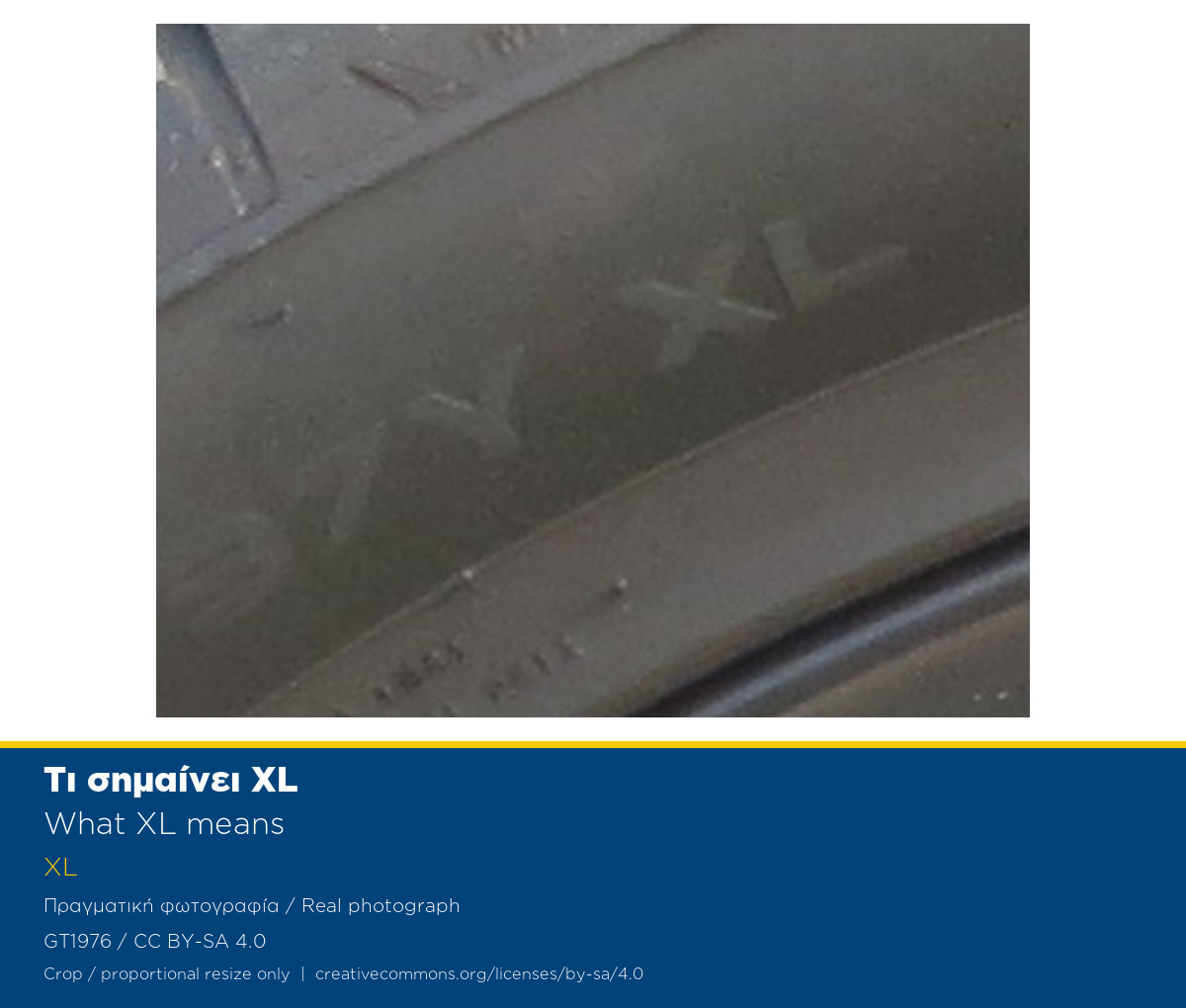
XL means Extra Load. EXTRA LOAD or REINFORCED indicates greater load capability than a standard tyre of the same size, with corresponding pressure requirements. It does not mean run-flat or puncture protection. HL, where present, identifies a different high-load category that also needs correct matching.
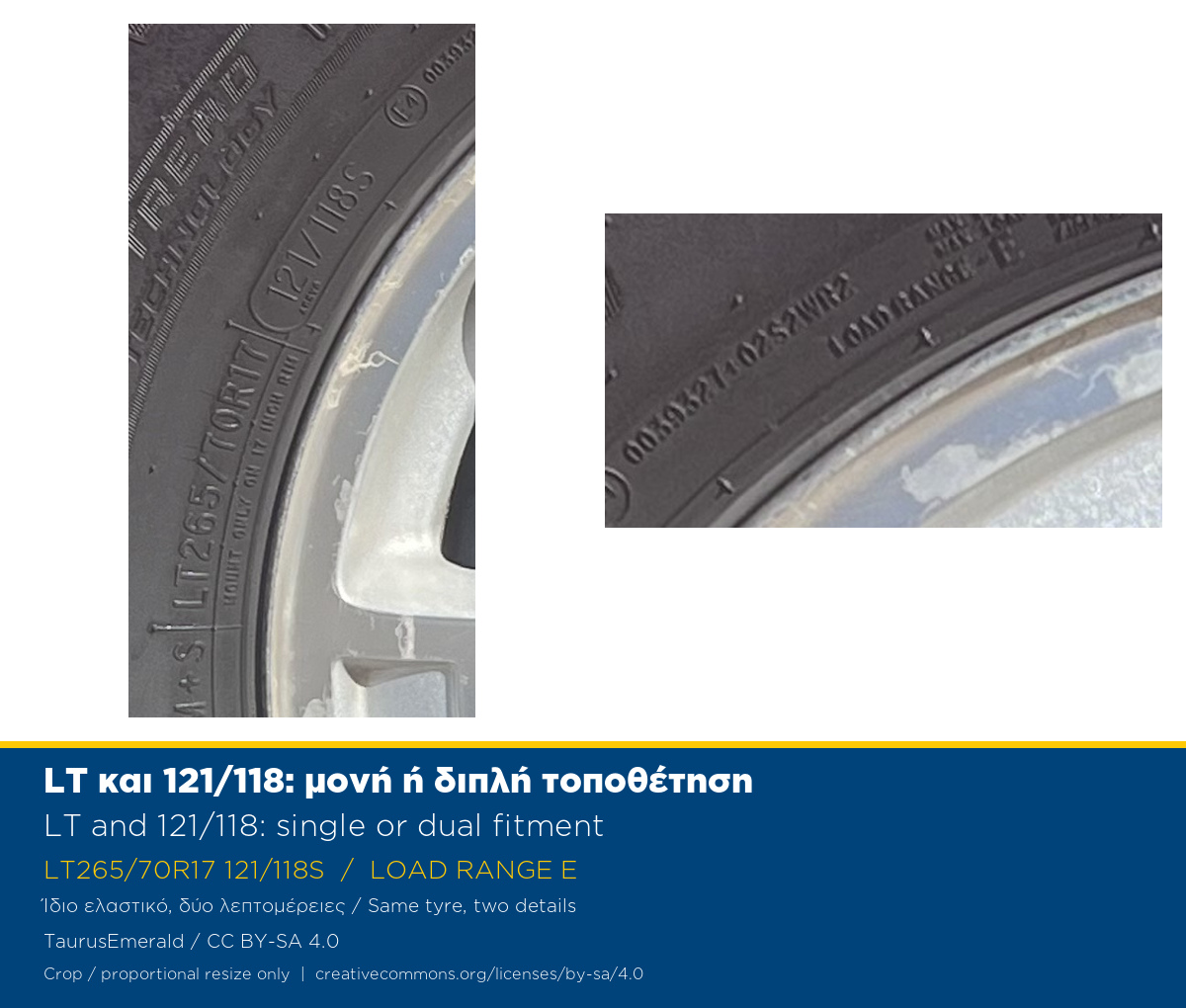
Commercial tyres may have C after the rim diameter or LT at the beginning. The photograph reads LT265/70R17 121/118S and LOAD RANGE E. The 121/118 indices refer to single/dual fitment respectively, not front/rear wheels. LOAD RANGE or PR describes a strength/load category; PR does not necessarily count the actual layers in a modern tyre.
Sources: MICHELIN · USTMA · European Commission · Pirelli.
GT1976 – CC BY-SA 4.0
GT1976 — Πηγή / Source · CC BY-SA 4.0
Περικοπή / αναλογική αλλαγή μεγέθους και χωριστές λεζάντες. Crop / proportional resize and separate captions. Photo adaptations retain the source licence.
TaurusEmerald – CC BY-SA 4.0
TaurusEmerald — Πηγή / Source · CC BY-SA 4.0
TaurusEmerald — Πηγή / Source · CC BY-SA 4.0
Περικοπή / αναλογική αλλαγή μεγέθους και χωριστές λεζάντες. Crop / proportional resize and separate captions. Photo adaptations retain the source licence.
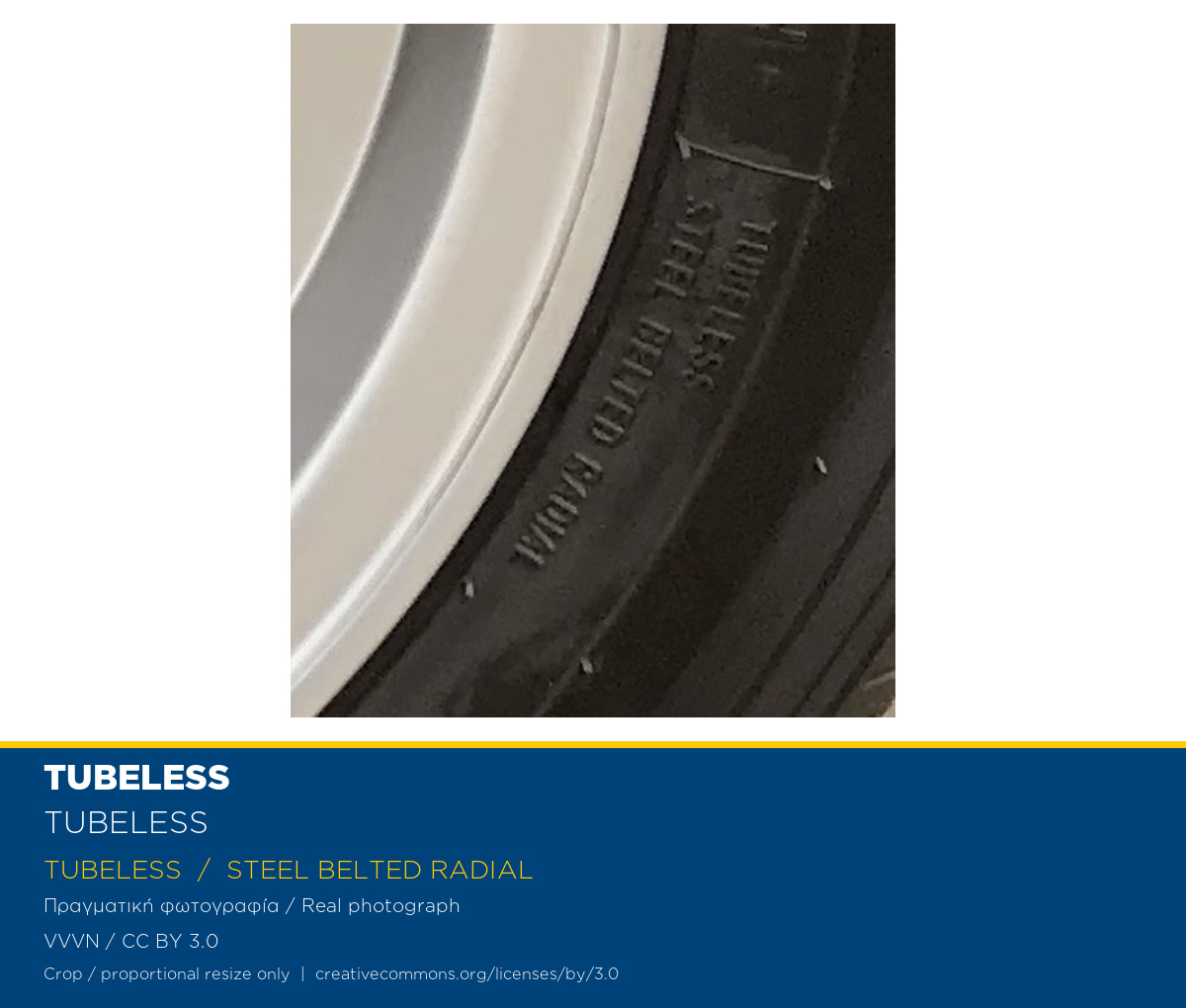
TUBELESS means the tyre is designed to operate without an inner tube. TUBE TYPE means it requires one. This describes construction and fitting, not a quality grade. A professional checks compatibility between the tyre, rim and any inner tube.
Sources: MICHELIN.
VVVN – CC BY 3.0
VVVN — Πηγή / Source · CC BY 3.0
Περικοπή / αναλογική αλλαγή μεγέθους και χωριστές λεζάντες. Crop / proportional resize and separate captions. Photo adaptations retain the source licence.
Sources: S01
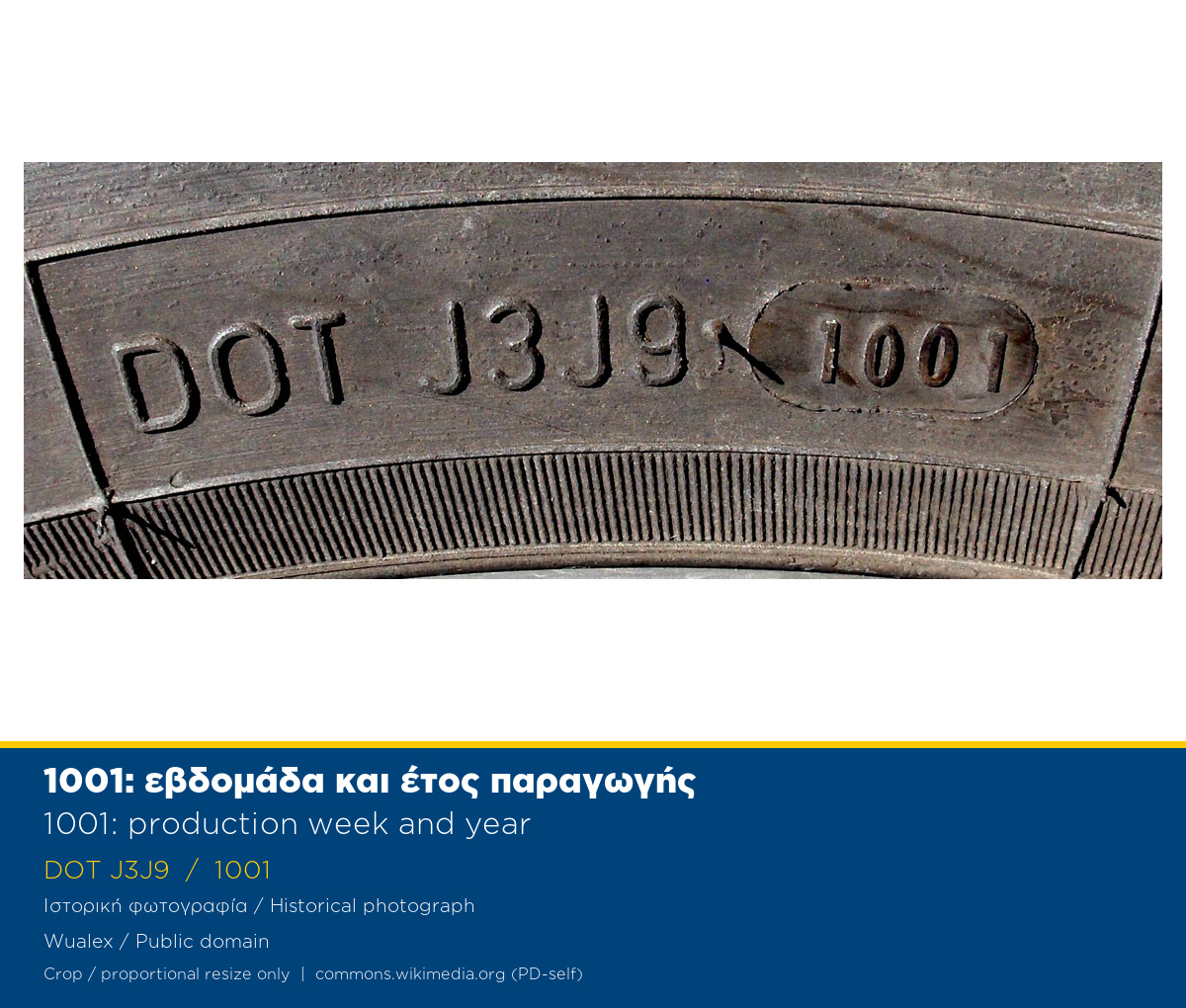
In the photograph, the full code ends in 1001: the first two digits mean the 10th week and the last two mean 2001. This is a historical photographic example, not a tyre recommended for use today. On modern tyres, this is how the final four digits are read.
The TIN is the identification code beside DOT and includes production information for traceability. The full code with the date may be visible on only one side.
The manufacturing date is not a printed expiry date. Condition is affected by age, use, maintenance and storage. Follow the manufacturer's inspection and replacement guidance; neither a recent date nor adequate tread alone proves that a tyre is safe.
Sources: NHTSA · NHTSA · MICHELIN.
Wualex – Public domain (PD-self)
Wualex — Πηγή / Source · Public domain (PD-self)
Περικοπή / αναλογική αλλαγή μεγέθους και χωριστές λεζάντες. Crop / proportional resize and separate captions. Photo adaptations retain the source licence.
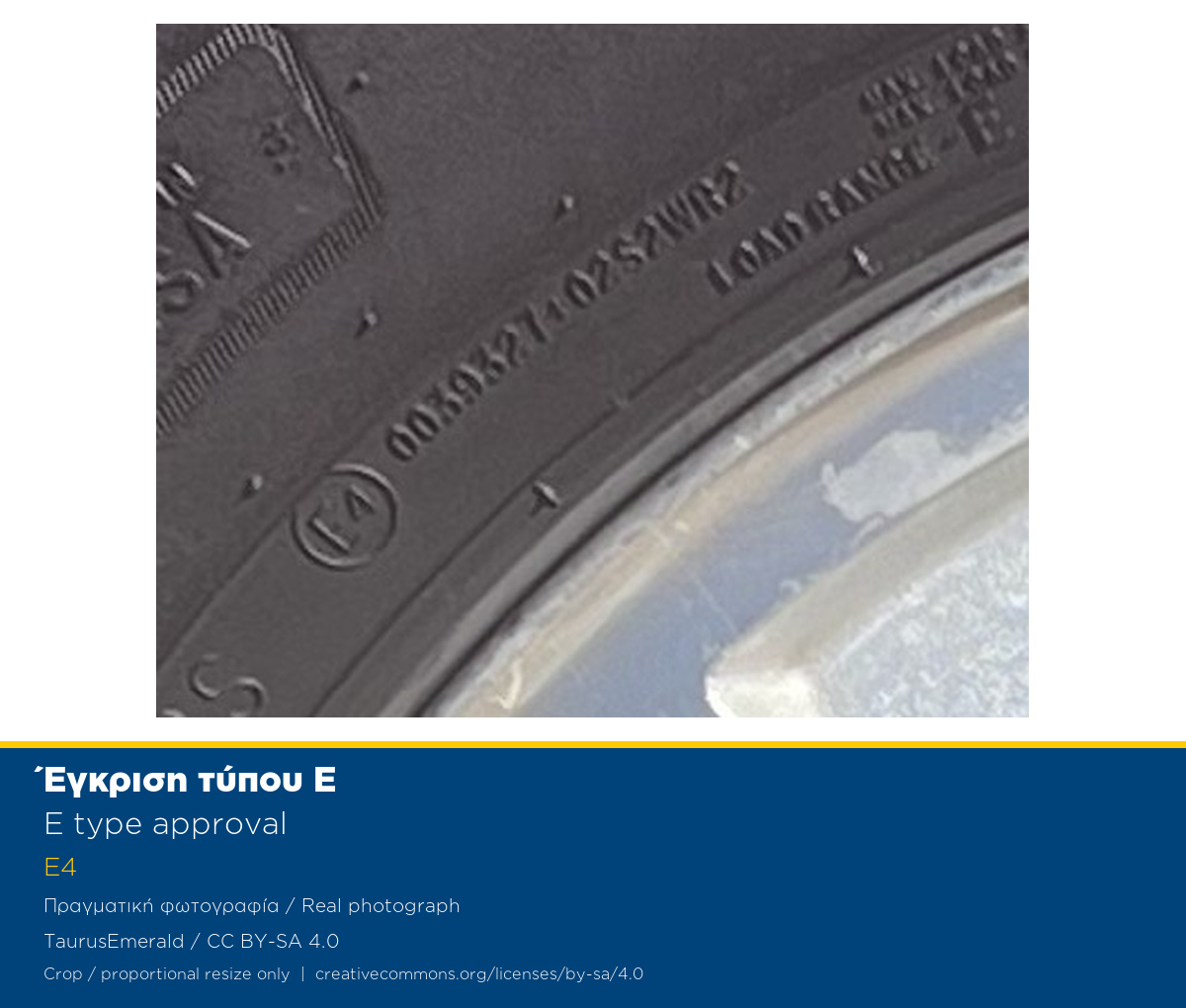
An uppercase E in a circle, accompanied by numbers, is a type-approval mark under UNECE regulations. The number next to E identifies the country granting approval, not the manufacturing country. Nearby numbers/suffixes relate to the approval and applicable regulations.
DOT is the manufacturer's certification that the tyre meets applicable US standards. It does not mean the US government tested and approved every individual tyre. Neither marking is a comparative grip grade or proof that this particular size fits your vehicle.
Sources: UNECE · NHTSA · Continental.
TaurusEmerald – CC BY-SA 4.0
TaurusEmerald — Πηγή / Source · CC BY-SA 4.0
Περικοπή / αναλογική αλλαγή μεγέθους και χωριστές λεζάντες. Crop / proportional resize and separate captions. Photo adaptations retain the source licence.
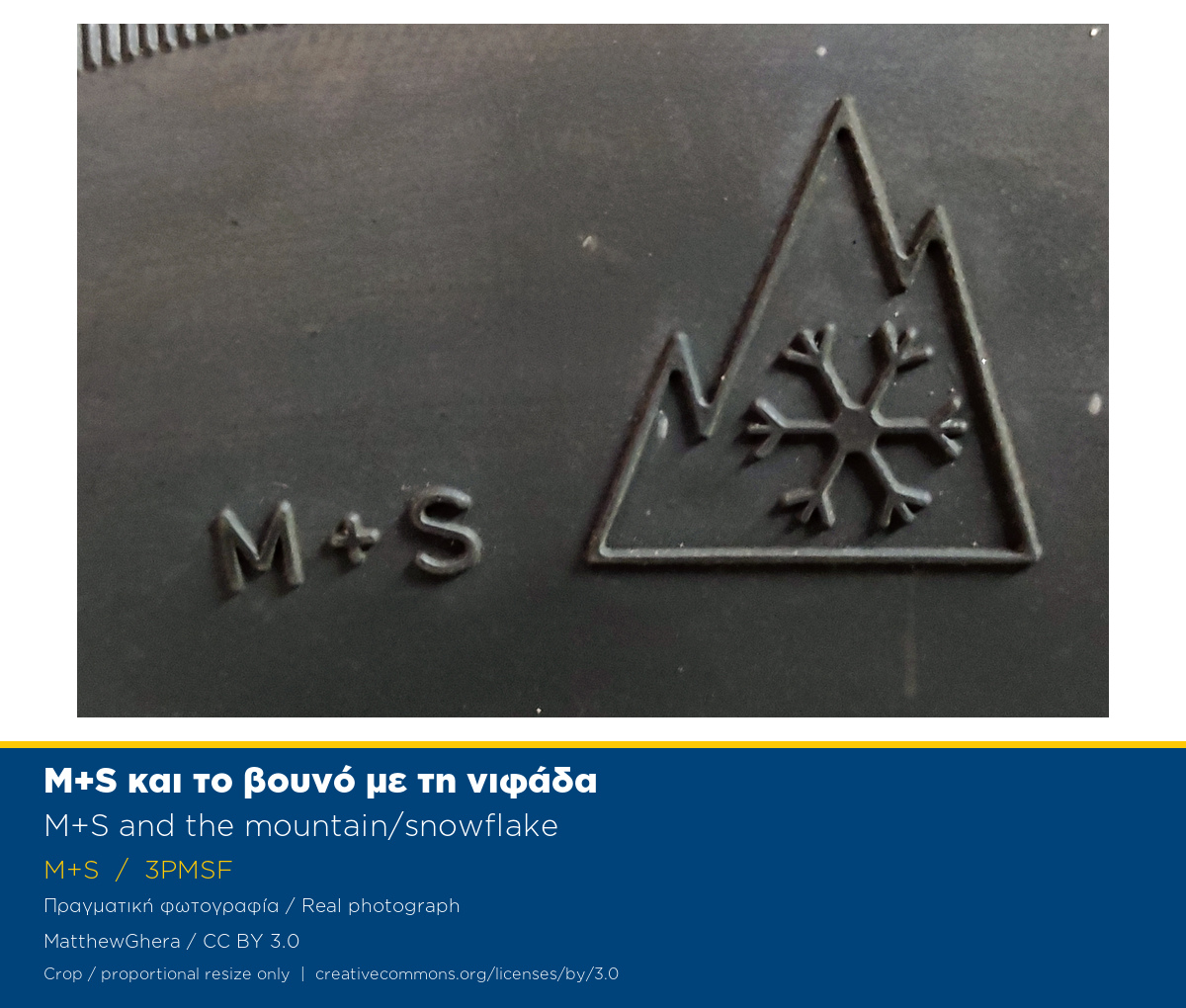
M+S, M&S or M.S stands for Mud and Snow. That marking alone does not demonstrate passing the specific severe-snow grip test.
The three-peak mountain with a snowflake, known as 3PMSF or the Alpine Symbol, indicates meeting defined snow-performance requirements. It is not a guarantee of grip in every winter condition or a separate ice certification. For a particular journey, also check the equipment requirements in force.
Sources: MICHELIN · UNECE · European Commission.
MatthewGhera – CC BY 3.0 (one of offered licenses)
MatthewGhera — Πηγή / Source · CC BY 3.0 (one of offered licenses)
Περικοπή / αναλογική αλλαγή μεγέθους και χωριστές λεζάντες. Crop / proportional resize and separate captions. Photo adaptations retain the source licence.
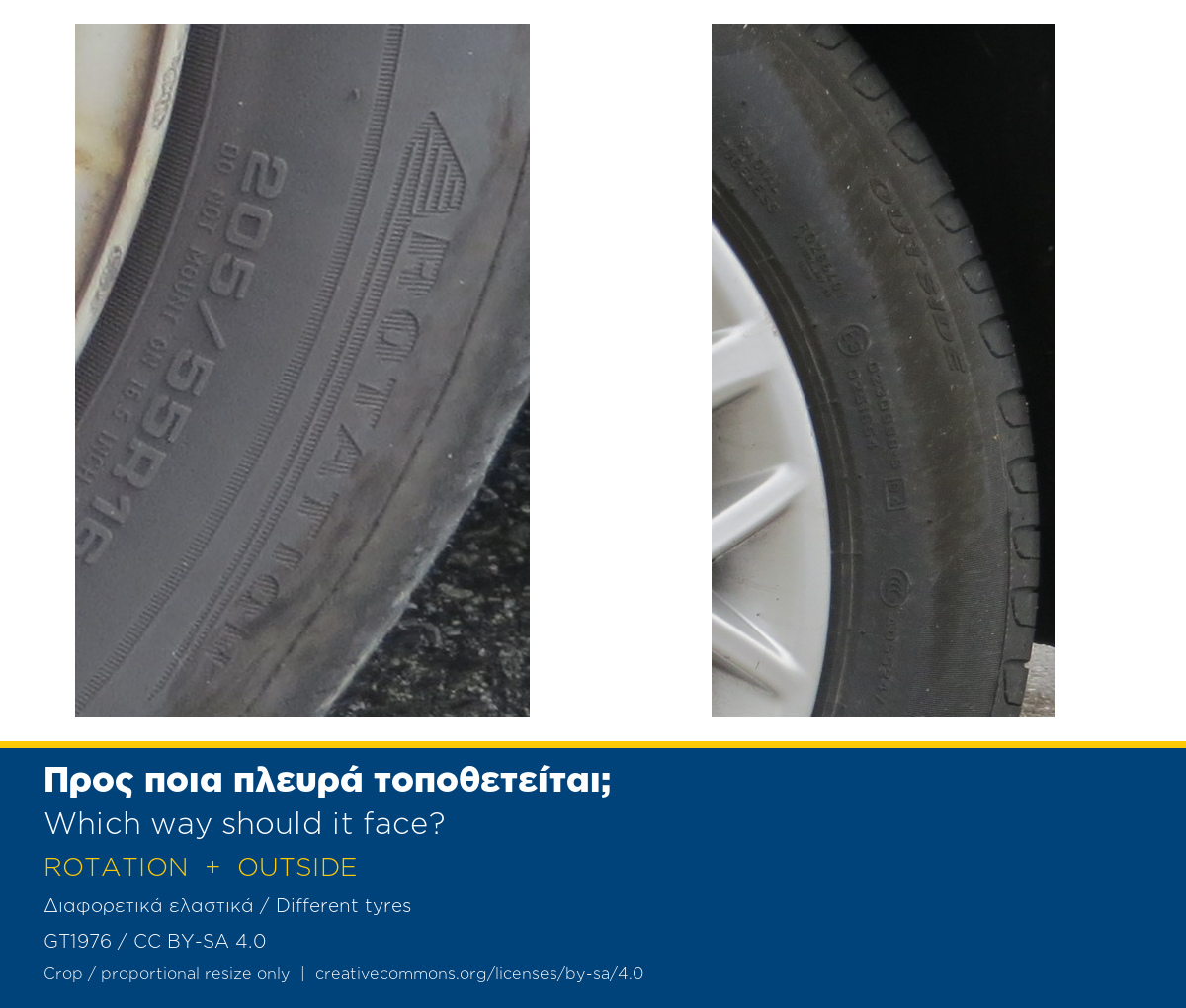
ROTATION with an arrow shows the required rolling direction. OUTSIDE identifies the side that must face outwards and INSIDE the side facing the vehicle on an asymmetric tyre.
Rolling direction and inner/outer orientation are different instructions. If several requirements apply, all must be followed. Do not decide from the groove pattern alone. Suspected incorrect fitting or changing wheel positions needs checking against vehicle and tyre instructions.
Sources: Continental · European Commission.
GT1976 – CC BY-SA 4.0
GT1976 — Πηγή / Source · CC BY-SA 4.0
GT1976 — Πηγή / Source · CC BY-SA 4.0
Περικοπή / αναλογική αλλαγή μεγέθους και χωριστές λεζάντες. Crop / proportional resize and separate captions. Photo adaptations retain the source licence.
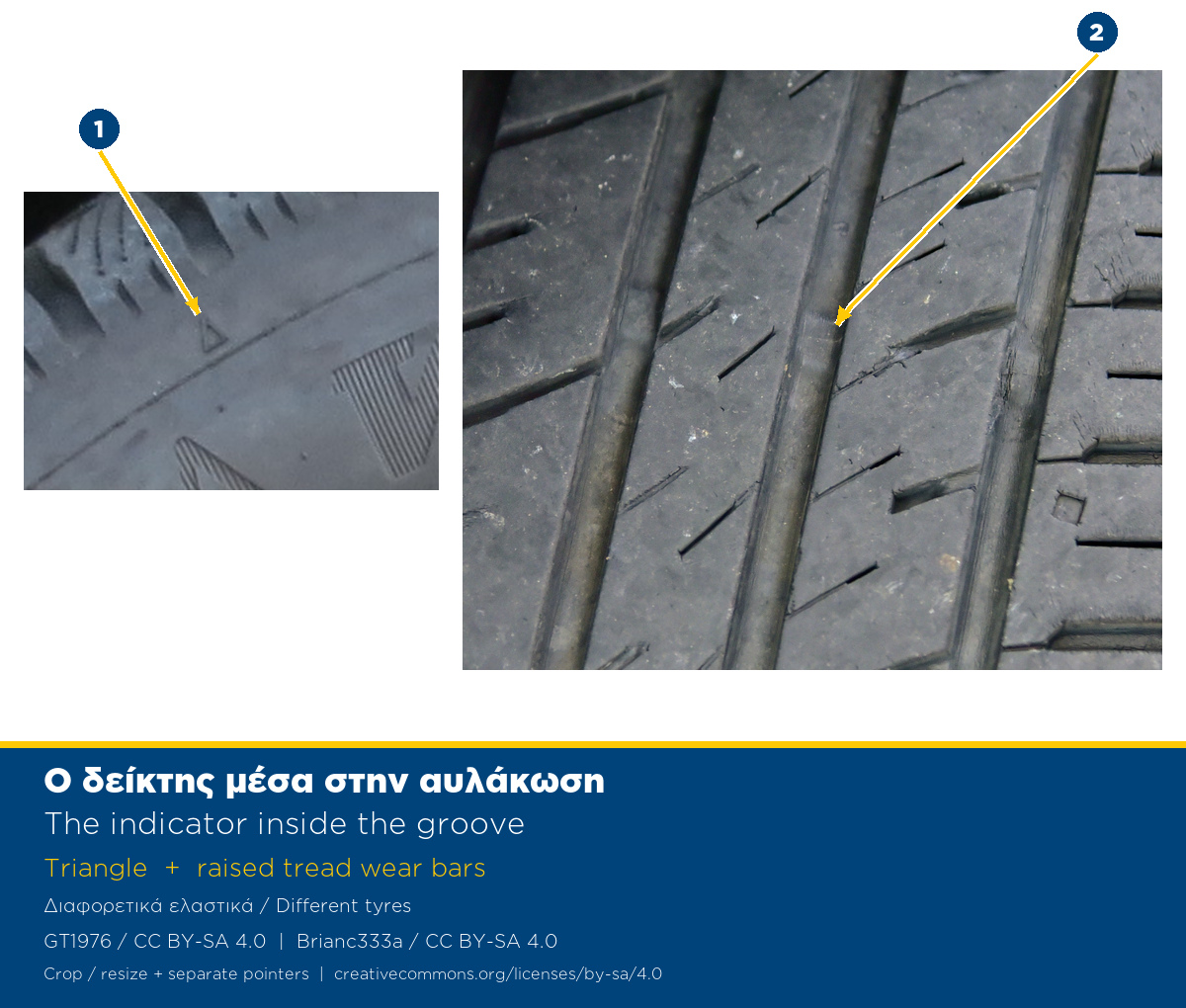
TWI stands for Tread Wear Indicator. A TWI inscription, triangle or manufacturer symbol on the sidewall can show where the wear indicators are located. The indicators themselves are small raised bars inside the main grooves.
When the neighbouring tread becomes level with the indicator, replacement is needed. On ordinary passenger-car tyres, the main indicator corresponds to 1.6 mm. Check several places: uneven wear, cuts, cracking or a bulge need assessment even if the tread is deeper elsewhere.
GT1976 – CC BY-SA 4.0 / Brianc333a – CC BY-SA 4.0
GT1976 — Πηγή / Source · CC BY-SA 4.0
Brianc333a — Πηγή / Source · CC BY-SA 4.0
Περικοπή / αναλογική αλλαγή μεγέθους και χωριστές λεζάντες. Crop / proportional resize and separate captions. Photo adaptations retain the source licence.
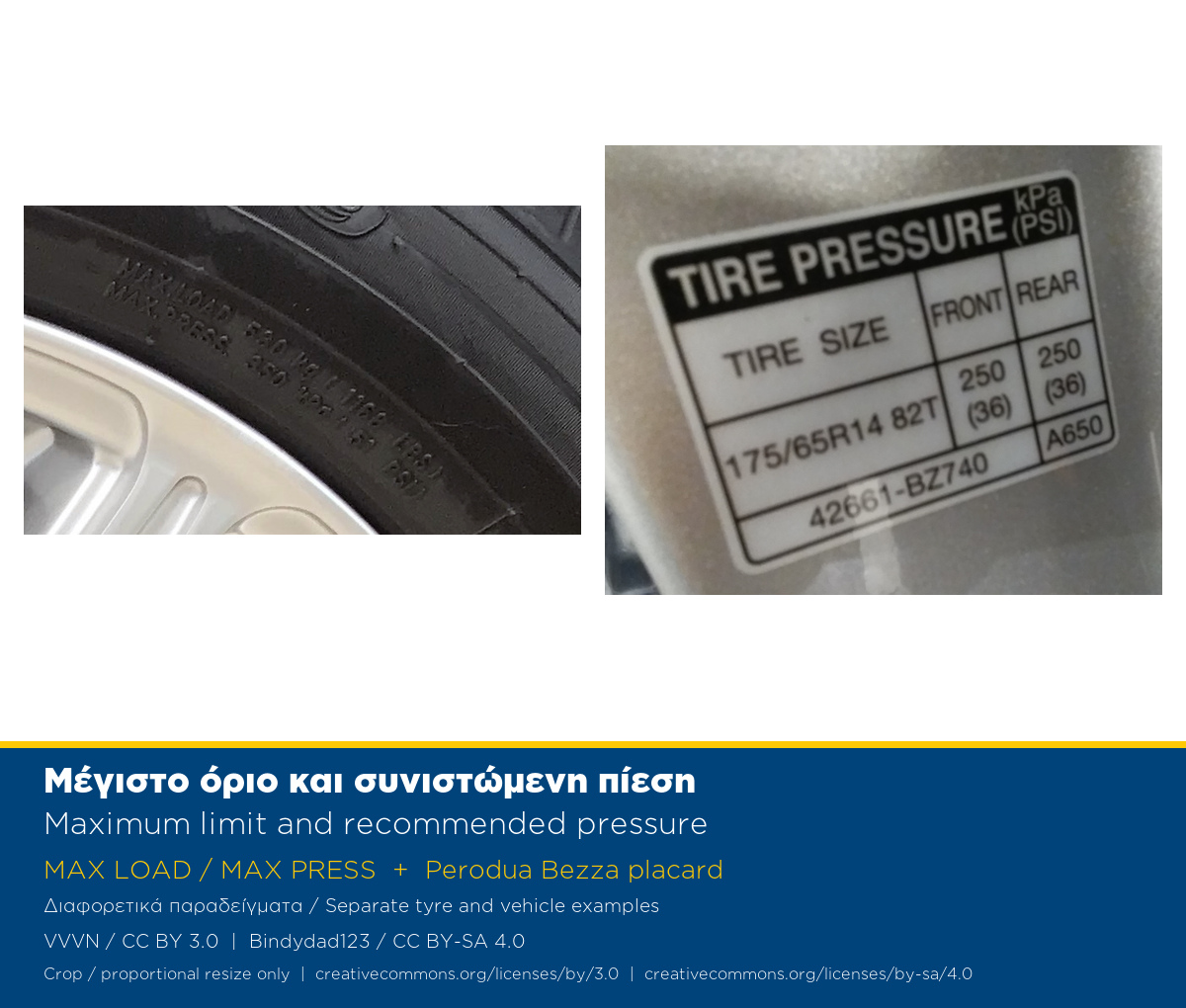
MAX PRESS indicates the tyre's maximum permitted pressure and MAX LOAD its maximum load, with the stated conditions. Units may differ: kPa or psi for pressure, kg or lb for load.
For everyday use, find the recommended cold-tyre pressure on the vehicle placard or in its handbook. Check the applicable size, front/rear axle and loading condition. NHTSA describes tyres as cold when the vehicle has not been driven for at least three hours. The sidewall's MAX PRESS value is not the inflation target for every car.
Sources: MICHELIN · NHTSA · Continental.
VVVN – CC BY 3.0 / Bindydad123 – CC BY-SA 4.0
VVVN — Πηγή / Source · CC BY 3.0
Bindydad123 — Πηγή / Source · CC BY-SA 4.0
Περικοπή / αναλογική αλλαγή μεγέθους και χωριστές λεζάντες. Crop / proportional resize and separate captions. Photo adaptations retain the source licence.
These three markings belong to a US grading system for many passenger-car tyres. There are exceptions, including winter tyres and temporary spares. It does not replace the EU label.
Sources: NHTSA · General Motors · Pirelli.
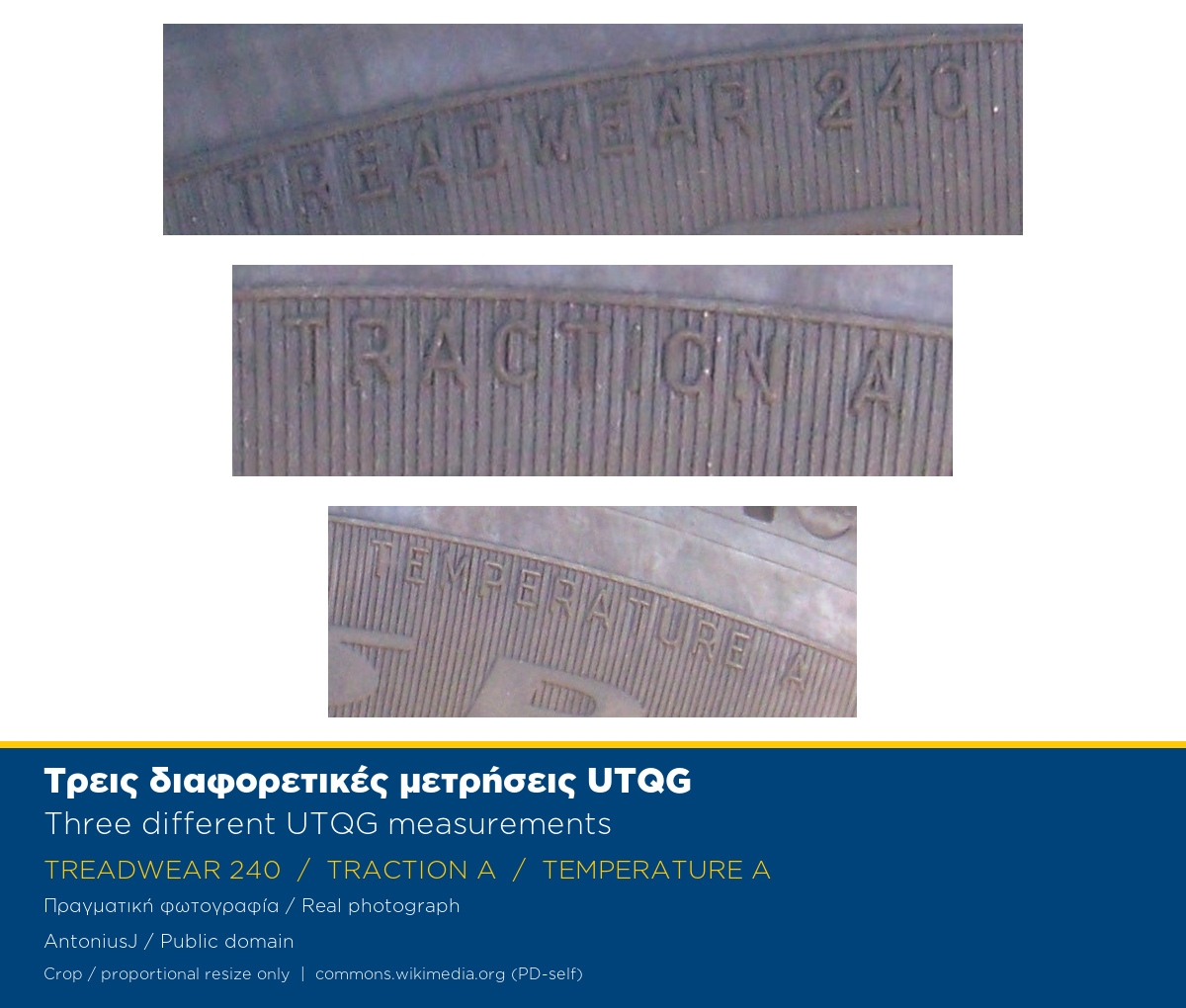
AntoniusJ – Public domain (PD-self)
AntoniusJ — Πηγή / Source · Public domain (PD-self)
AntoniusJ — Πηγή / Source · Public domain (PD-self)
AntoniusJ — Πηγή / Source · Public domain (PD-self)
Περικοπή / αναλογική αλλαγή μεγέθους και χωριστές λεζάντες. Crop / proportional resize and separate captions. Photo adaptations retain the source licence.
Here, use the particular manufacturer's glossary. The names are not universal across brands.
Sources: MICHELIN · MICHELIN · Pirelli. USTMA.
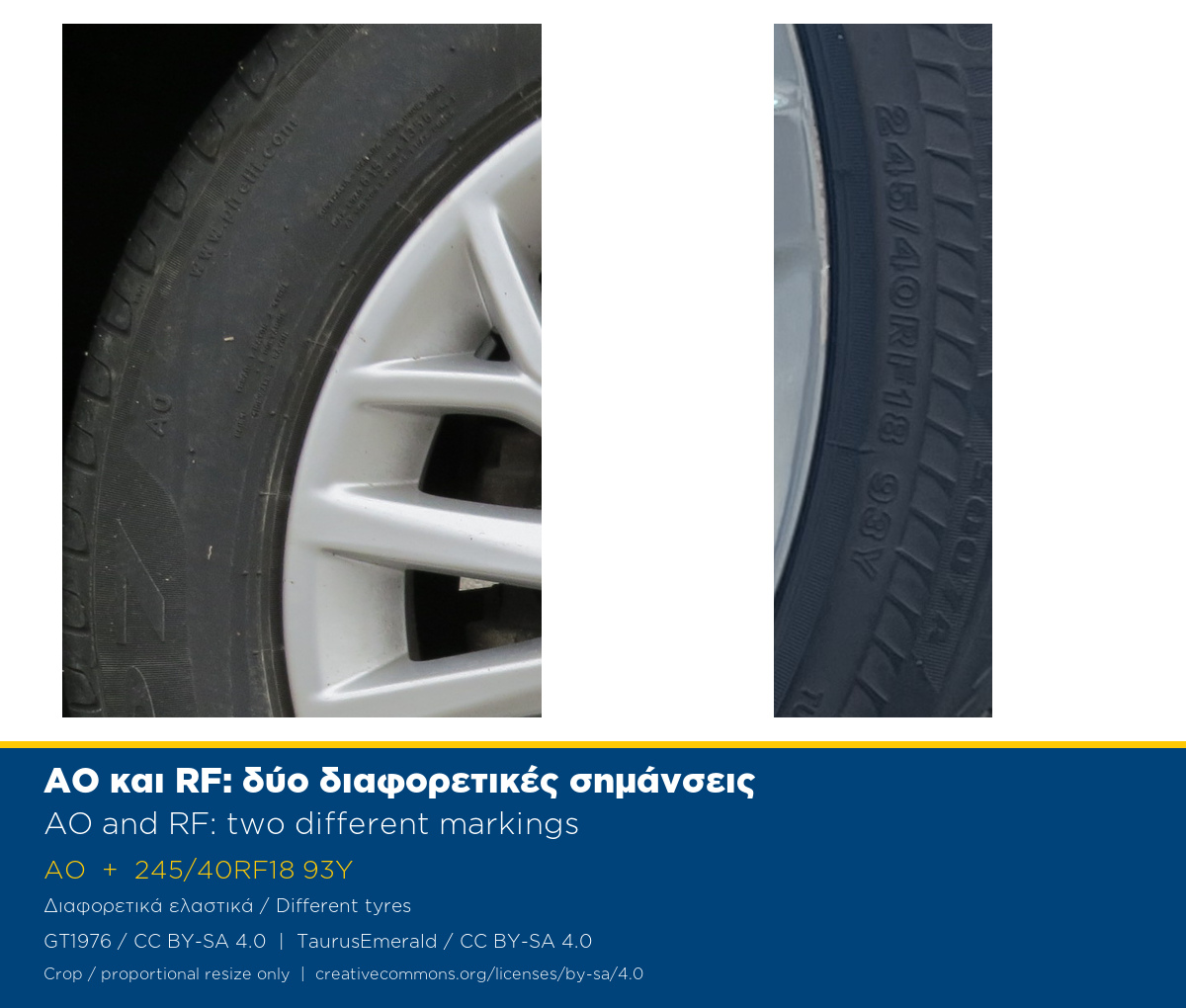
GT1976 – CC BY-SA 4.0 / TaurusEmerald – CC BY-SA 4.0
GT1976 — Πηγή / Source · CC BY-SA 4.0
TaurusEmerald — Πηγή / Source · CC BY-SA 4.0
Περικοπή / αναλογική αλλαγή μεγέθους και χωριστές λεζάντες. Crop / proportional resize and separate captions. Photo adaptations retain the source licence.
Smaller lettering may describe layers beneath the tread (TREAD) and in the sidewall (SIDEWALL), with materials such as POLYESTER, STEEL or NYLON. This is construction information. It does not replace the load index, measure tread depth or prove puncture protection.
MADE IN, if present, identifies the manufacturing country. Other small production codes, mould markings or commercial symbols require the manufacturer's explanation. They do not all have a universal meaning for drivers.
Sources: USTMA · Bridgestone · Continental.
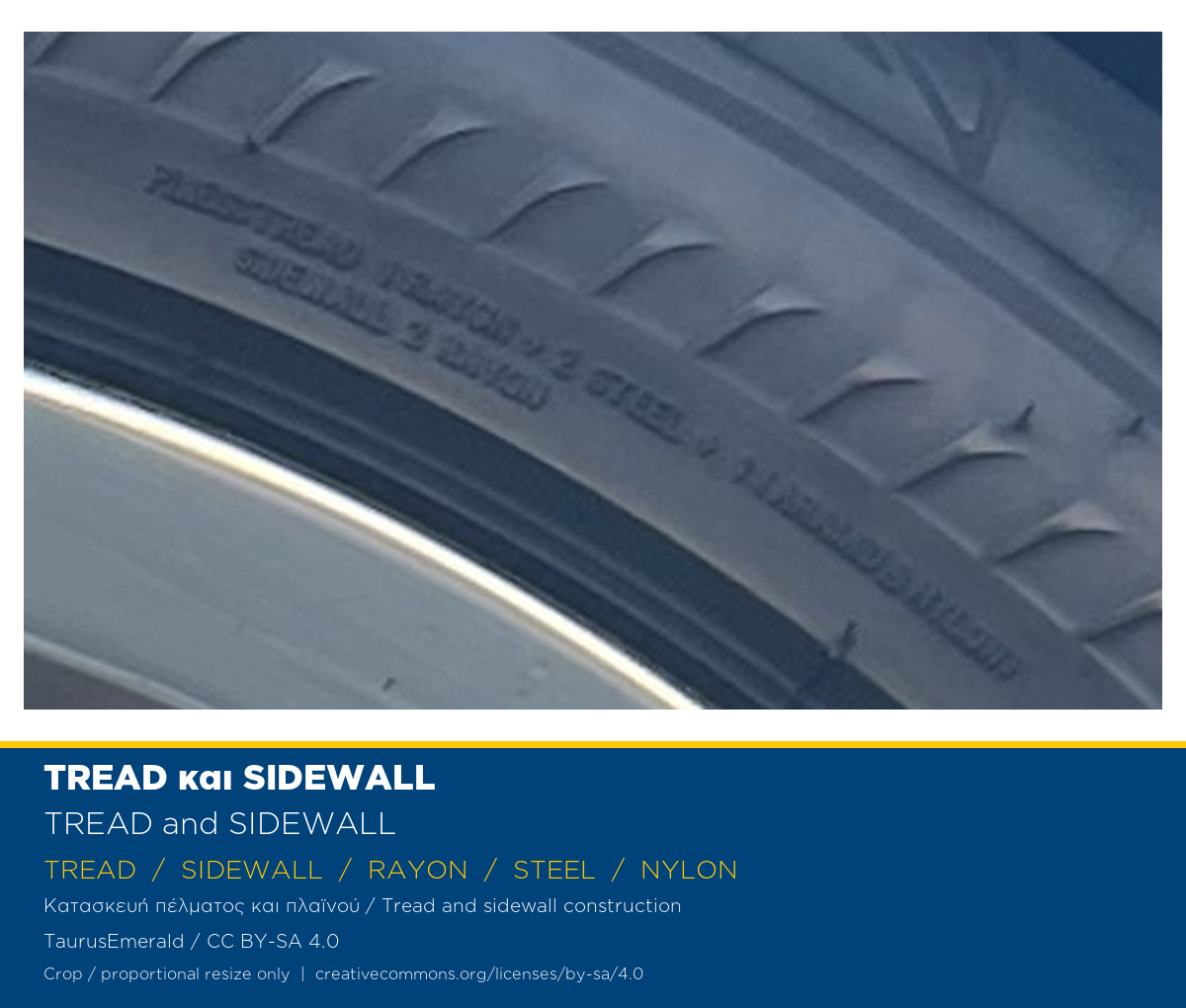
TaurusEmerald – CC BY-SA 4.0
TaurusEmerald — Πηγή / Source · CC BY-SA 4.0
Περικοπή / αναλογική αλλαγή μεγέθους και χωριστές λεζάντες. Crop / proportional resize and separate captions. Photo adaptations retain the source licence.
The label covers C1/C2/C3 tyre classes, with specified exceptions. These are not the vehicle's type-approval categories. Check supplier, tyre-type identifier and size so you compare the actual version you intend to buy.
Scan the QR code for the EPREL entry and product information sheet. The label does not describe every performance characteristic, a used tyre's current condition or suitability for every vehicle. The official image in this guide is an educational example, not a product rating.
Sources: European Commission · European Commission · SEAI.
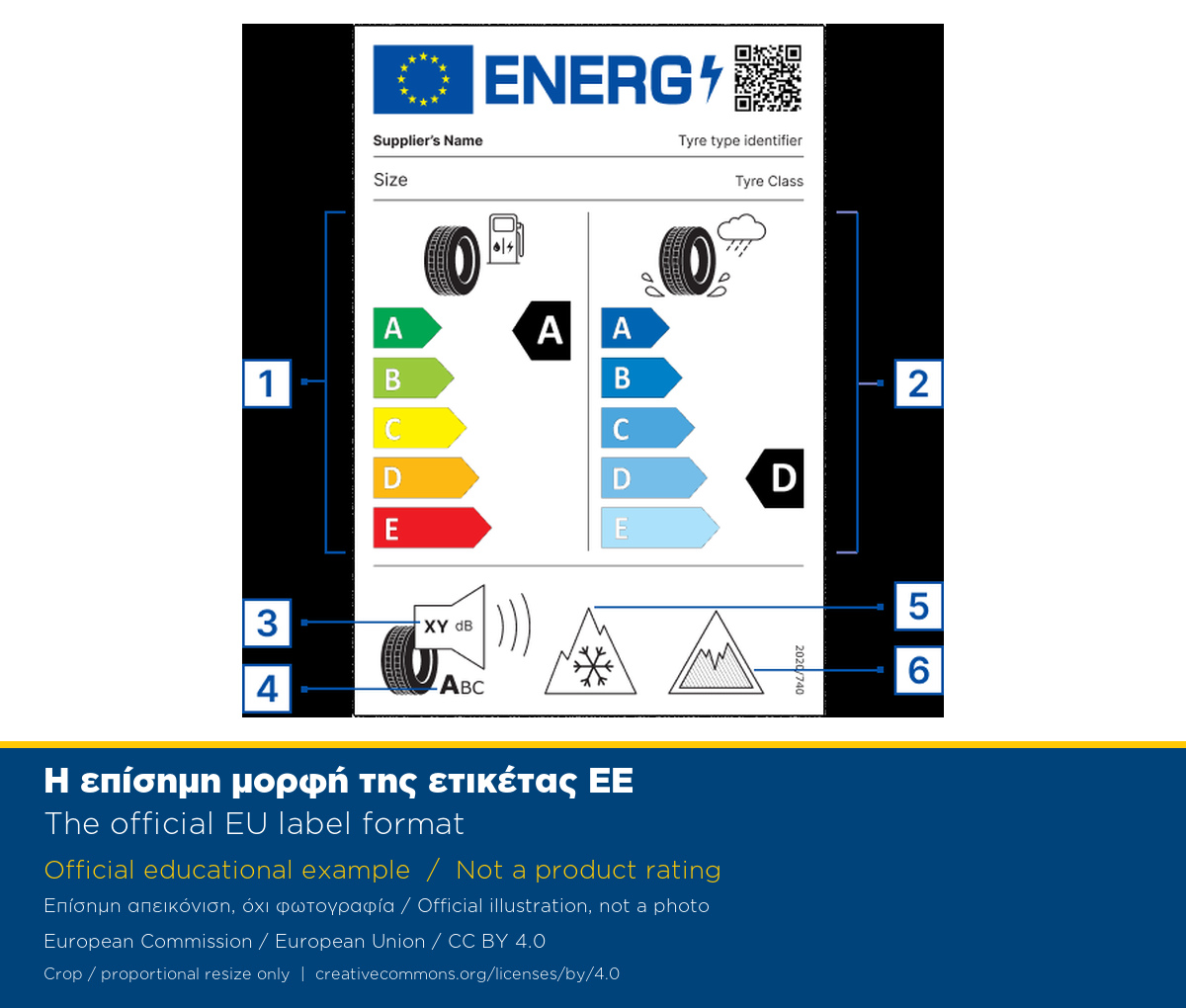
European Commission / European Union – CC BY 4.0
European Commission / European Union — Πηγή / Source · CC BY 4.0
Περικοπή / αναλογική αλλαγή μεγέθους και χωριστές λεζάντες. Crop / proportional resize and separate captions. Photo adaptations retain the source licence.
You do not need to memorise every code. Take clear photographs of the complete size/ratings, the date code and the vehicle's pressure placard, and note the brand/model. These make the discussion with your technician specific.
Also explain how you use the vehicle: typical load, routes and seasons. The right tyre combines an approved fitment, intended use and sound condition—not one impressive code. If a mark is not explained here, check the brand's technical material rather than guessing.
Sources: European Commission · MICHELIN · MICHELIN.
Have a question about the tyre markings or specifications for your ECOCAR? Contact our team with your vehicle model and clear photographs of the markings.
Χρησιμοποιούμε cookies για να σας προσφέρουμε μια εξατομικευμένη εμπειρία. Επιπλέον, αναλύουμε την επισκεψιμότητα και ενισχύουμε την ασφάλεια της πλατφόρμας, ώστε να απολαμβάνετε τις υπηρεσίες μας σε ένα περιβάλλον που συνεχώς εξελίσσεται.
Όταν επισκέπτεστε οποιονδήποτε ιστότοπο, ενδέχεται να αποθηκεύσει ή να ανακτήσει πληροφορίες στο πρόγραμμα περιήγησής σας, κυρίως με τη μορφή cookies. Ελέγξτε τις προσωπικές σας ρυθμίσεις εδώ.